Comply with U.S. and Foreign Regulations

Exporting illustration.

U.S. and Foreign Regulations and Standards

Overview

Successful exporters must comply with both U.S. regulations and foreign import requirements. When shipping to U.S. free trade agreement partners, you may qualify for reduced or zero tariff rates. Understand compliance issues and access useful tools to protect your business.
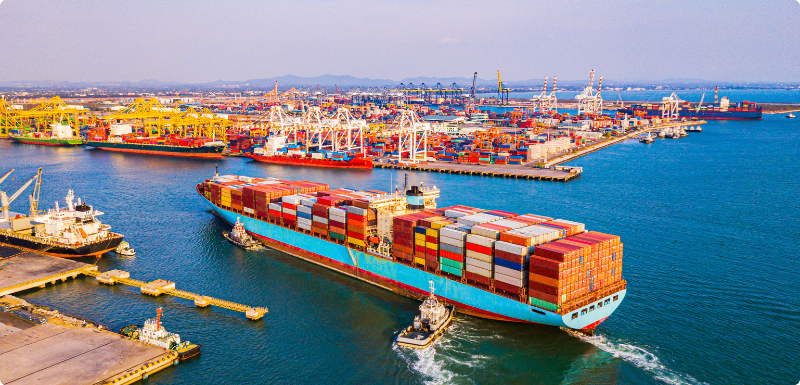

 

A photograph of a ship loaded with colorful containers coming into harbor.
Export Regulations

Regulations cover exports and potential customers.

A photograph of two men dressed in hard hats and orange vests in a shipyard loaded with colorful shipping containers.
Foreign Import Regulations

Understand customs, standards, privacy laws, and tariffs.

A photograph of smiling business people in suits. Two of them are shaking hands.
Free Trade Agreements

Considerations when shipping to free trade agreement countries.

Tools to Comply with U.S. Export Regulations

U.S. Export Controls
The Export Administration Regulations (EAR) govern the export and re-export of some products, software and technology.
Consolidated Screening List
Check the CSL that identifies parties for which the U.S. Government maintains restrictions on certain exports, reexports or transfers of items.
Automated Export System
Federal law requires exporters to use the AES to report shipments valued at $2,500+ or if it requires an export license.
Obtaining an Export License
Learn when you need an Export License and from which agency in order to export your product.

Other Legal Requirements
Sometimes there are special cases with other legal obligations to consider.

Tools to Comply with Foreign Regulations and Standards

These are commonly used tools to navigate foreign country import requirements.

Custom Requirements and Documentation
The requirements needed to export can vary country by country. Use Country Commercial Guides to learn about specific markets of interest and avoid issues.
Product Standards
Standards and regulations in overseas markets can protect the health and safety of consumers or be barriers to trade. Region-wide standards include the EU CE mark and China CCC mark.
Tariffs and Free Trade Agreements
Taxes levied by foreign governments on your product can vary by country, and may be eliminated through free trade agreements with the U.S.

Discriminatory Barriers
When particularly burdensome or discriminatory barriers are imposed by a foreign government, a U.S. company may be able to obtain help from the U.S. Government.
European Union Privacy/Data Laws
The EU General Data Protection Regulation (GDPR) sets the rules for the protection of personal data and for the movement of data in the EU.
Transparent light blue flat world map graphic with a orange sphere in the middle with blue cage with blue and orange gears icons ground sphere.

U.S. Commercial Service - Initial Market Check

Our industry specialists overseas can analyze your product/service’s potential in a targeted market through their connections with key industry participants

Continue Your Export Journey


Recommended next steps.

Exporter Resources.

Tools and resources for exporters.

Get ready to export.

Our three-phased approach to start exporting.

US Commercial Service

Learn about our global network of export experts.

Next

Subscribe to our newsletter for regular updates.

×

Global Business Navigator Chatbot Beta

Welcome to the Global Business Navigator, an artificial intelligence (AI) Chatbot from the International Trade Administration (ITA). This tool, currently in beta version testing, is designed to provide general information on the exporting process and the resources available to assist new and experienced U.S. exporters. The Chatbot, developed using Microsoft’s Azure AI services, is trained on ITA’s export-related content and aims to quickly get users the information they need. The Chatbot is intended to make the benefits of exporting more accessible by understanding non-expert language, idiomatic expressions, and foreign languages.

Limitations

As a beta product, the Chatbot is currently being tested and its responses may occasionally produce inaccurate or incomplete information. The Chatbot is trained to decline out of scope or inappropriate requests. The Chatbot’s knowledge is limited to the public information on the Export Solutions web pages of Trade.gov, which covers a wide range of topics on exporting. While it cannot provide responses specific to a company’s product or a specific foreign market, its reference pages will guide you to other relevant government resources and market research. Always double-check the Chatbot’s responses using the provided references or by visiting the Export Solutions web pages on Trade.gov. Do not use its responses as legal or professional advice. Inaccurate advice from the Chatbot would not be a defense to violating any export rules or regulations.

Privacy

The Chatbot does not collect information about users and does not use the contents of users’ chat history to learn new information. All feedback is anonymous. Please do not enter personally identifiable information (PII), sensitive, or proprietary information into the Chatbot. Your conversations will not be connected to other interactions or accounts with ITA. Conversations with the Chatbot may be reviewed to help ITA improve the tool and address harmful, illegal, or otherwise inappropriate questions.

Translation

The Chatbot supports a wide range of languages. Because the Chatbot is trained in English and responses are translated, you should verify the translation. For example, the Chatbot may have difficulty with acronyms, abbreviations, and nuances in a language other than English.

Privacy Program | Information Quality Guidelines | Accessibility